Disc brake calipers convert hydraulic pressure into clamping force, pressing brake pads against a rotating rotor. The design affects pedal feel, heat management, maintenance, and pad wear. That sounds simple. Floating, or sliding, calipers move on guide pins. Their piston pushes one pad, while the housing draws the other inward. Fixed calipers stay firmly mounted and use pistons on both sides of the rotor. They can offer consistent clamping, but their size, weight, and cost vary. Multiple pistons can distribute pressure across a pad, though a higher piston count does not automatically mean better braking. Labels can blur.
This Caliper Disc overview compares the main caliper types and explains where each design is commonly used. It also looks at piston arrangements, everyday driving, performance demands, and service considerations. A short commute and repeated hard stops place different demands on brake components. Still, the caliper is only one part of the system; pads, rotors, fluid, and correct installation matter too. Before choosing a replacement, check the vehicle’s specifications and confirm fitment with a qualified parts supplier or technician. A visual inspection can reveal leaks, damaged boots, uneven pad wear, or seized guide pins, but it cannot confirm every internal fault. Small details matter. The terminology is not always tidy, so compare the actual construction and manufacturer’s specifications rather than relying on a label alone.
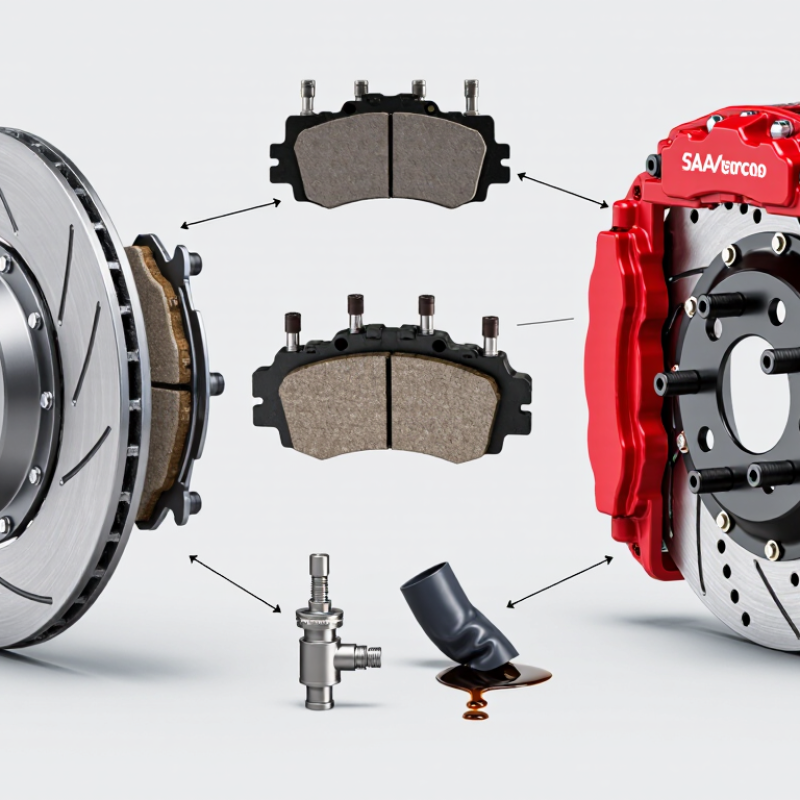
Disc brake calipers are commonly classified by how they move around the rotor. A fixed caliper is bolted in place and does not slide during braking. Pistons on both sides press the pads against the rotor. This layout can provide even clamping, but it may add weight and complexity. A floating, or sliding, caliper moves on guide pins. Its piston pushes one pad inward, and the caliper shifts to pull the opposite pad against the rotor. The distinction matters. Worn or sticking guide pins can prevent that movement and cause uneven pad wear.
Calipers are also grouped by piston count and arrangement. Many floating designs use one piston, while fixed designs may use several pistons facing each other. More pistons can distribute force across a larger pad, but piston count alone does not determine braking performance. Rotor size, pad material, hydraulic condition, and vehicle setup matter too. When inspecting a caliper, look for fluid leaks, torn dust boots, and pads wearing at different rates. A visual check can reveal clues, though it cannot confirm every internal fault. Classification describes the design; it does not prove the component is healthy.
Fixed calipers hold pistons on both sides of the brake rotor. When hydraulic pressure arrives, opposing pistons press the pads inward together. The caliper does not slide across guide pins, unlike a floating design. This rigid arrangement can provide even pad loading, provided the pistons move freely and the rotor remains true.
More pistons do not automatically mean better braking. Piston area, pad shape, rotor size, and hydraulic pressure all affect clamp force and heat management. During inspection, look for uneven pad wear, fluid seepage, and pistons that retract poorly. A fixed caliper can feel precise, but it may be less forgiving of neglected maintenance. That matters.
NHTSA’s Federal Motor Vehicle Safety Standard No. 135 sets a 168-foot stopping-distance limit for many passenger cars in a prescribed 70-mph service-brake test. This is a whole-vehicle benchmark, not a caliper score. Tires, road surface, brake balance, and test conditions also shape the result. That distinction is easy to overlook. A well-designed caliper supports repeatable braking, but it cannot compensate for worn pads or contaminated friction surfaces.
Fixed calipers are mounted rigidly around the rotor. Hydraulic pistons on both sides press the brake pads against it; common configurations include four, six, and eight pistons in total. The chart shows piston count, not braking-force output.
Floating calipers use pistons on the inboard side of the rotor. When hydraulic pressure moves the piston outward, it presses the inner pad against the disc. The caliper then slides on guide pins, pulling the outer pad into contact. Simple, compact, and widely used. Many designs have one piston, though configurations vary.
The sliding action depends on clean, freely moving guide pins. Corrosion or dried lubricant can make the caliper bind, causing uneven pad wear, heat, or a vehicle pulling to one side. NHTSA’s FMVSS No. 135 specifies a 70-meter maximum stopping distance in a defined 100-km/h service-brake test for passenger cars. That benchmark tests the vehicle’s braking system, not the caliper alone; tires, pads, rotor condition, and loading also matter. A useful reminder, though it is easy to overlook.
Tips: Check both pads for uneven wear, and inspect the guide-pin boots for tears. Use lubricant specified for brake components, not general-purpose grease. If one wheel smells hot after a drive, let the brakes cool before inspection.
Sliding calipers use one or more pistons on the rotor’s inner side. When hydraulic pressure pushes a piston outward, the inner brake pad contacts the rotor. That force also moves the caliper body along guide pins, drawing the outer pad against the opposite face. Both pads then clamp the rotating disc. It’s a compact arrangement, and it can keep braking hardware relatively light.
The guide pins need to move freely. Protective rubber boots help keep out water and road grit, while suitable brake lubricant reduces binding at the specified contact points. A seized pin may leave one pad wearing faster than the other, or cause the caliper to drag after braking. That matters. During inspection, compare inner and outer pad thickness, check the boots for tears, and look for rust or restricted movement. Uneven wear can also have other causes, so it is a clue, not a diagnosis. Sliding calipers are straightforward in principle, but small maintenance details can affect pedal feel, heat, and pad life.
| Caliper Type or Feature | Design | How It Operates | Typical Characteristics | Common Applications |
|---|---|---|---|---|
| Single-piston sliding caliper | One hydraulic piston is usually located on the inboard side of the rotor. The caliper body is mounted so it can move laterally on guide pins or slides. | Hydraulic pressure pushes the piston and inboard pad against the rotor. The reaction force moves the caliper along its guides, bringing the outboard pad against the opposite rotor face. | Simple, compact design with fewer pistons. The sliding mechanism must move freely for the pads to apply and release evenly. | Common on passenger vehicles, particularly where a compact and cost-effective brake assembly is suitable. |
| Multi-piston sliding caliper | Uses two or more pistons, generally positioned on the inboard side, while the caliper still moves on guides. | The pistons press the inboard pad against the rotor; caliper movement then applies the outboard pad. Multiple pistons distribute force across a larger pad area. | Can provide more evenly distributed pad pressure than a single-piston design. It remains a sliding caliper, unlike a fixed caliper whose body does not move. | Used in some applications requiring greater pad area or braking capacity, depending on the vehicle design. |
| Guide pins and bushings | Pins, sleeves, or bushings connect the caliper to its bracket while allowing controlled side-to-side movement. | They guide the caliper as hydraulic force applies the outboard pad and help the caliper return as pressure is released. | Corrosion, damaged boots, or inadequate lubrication can restrict movement and contribute to uneven pad wear or brake drag. | Used in sliding-caliper assemblies; inspection and service requirements depend on the vehicle manufacturer’s procedure. |
| Caliper bracket | A rigid bracket attaches to the suspension or wheel-end structure and supports the sliding caliper and pad hardware. | The bracket reacts to braking forces while allowing the caliper to slide along its guides. | Provides structural support and helps locate the pads relative to the rotor. It is not the part that hydraulically squeezes the pads. | Found in many disc-brake systems using sliding calipers. |
| Hydraulic application | Brake fluid acts on the piston inside the caliper bore; a seal retains fluid and helps the piston retract slightly when pressure falls. | Pedal input raises hydraulic pressure, extending the piston and clamping the pads against both rotor faces through piston force and caliper movement. | Braking force depends on hydraulic pressure, piston area, pad friction, and the brake system’s overall design. | Standard operating principle for hydraulic sliding disc-brake calipers. |
| Release and wear compensation | The piston seal and free movement of the guide system support release after the driver lets up on the brake pedal. | As hydraulic pressure decreases, the piston seal flexes back slightly and the pads move away from the rotor enough to reduce contact. The piston advances over time as the pads wear. | Normal operation does not require a large visible gap. Persistent drag, pulling, or uneven wear can indicate a fault that needs inspection. | Applies to sliding-caliper systems throughout their service life. |
| Sliding versus fixed caliper | A sliding caliper moves on guides; a fixed caliper is rigidly mounted and typically has pistons on both sides of the rotor. | Sliding designs use caliper movement to apply the outboard pad. Fixed designs use opposing pistons to clamp both pads. | These are different caliper architectures. Neither design is universally superior; suitability depends on braking requirements, packaging, cost, and vehicle design. | Both types are used in disc-brake systems, selected to meet the needs of a particular vehicle. |
A floating caliper uses pistons on one side of the rotor. When the driver presses the brake pedal, the caliper slides on guide pins and clamps both pads against the rotor. This layout is compact and common on everyday cars. It is usually straightforward to inspect. But if a guide pin sticks, one pad may wear faster than the other. A thin, uneven pad is a useful warning sign.
A fixed caliper does not slide. Pistons on both sides press the pads toward the rotor, which can provide firm, even contact during repeated hard braking. You may find this arrangement on vehicles built for heavier loads or demanding driving. It often needs more space and can cost more to service. More pistons do not automatically mean better braking; rotor size, pad material, cooling, and vehicle weight matter too. Details count.
Calipers also differ by piston count and construction. A single-piston floating design keeps parts relatively simple, while fixed designs may use several pistons to distribute pressure across wider pads. In practical use, a commuter car may benefit more from reliable, easy-to-service hardware than from a complex setup. A vehicle that brakes repeatedly downhill has different needs. There is no perfect type for every driver. When checking a caliper, look for fluid leaks, torn dust boots, and smooth movement on its pins. A visual check cannot reveal every problem.
Pistons sit on both sides of the rotor. Hydraulic pressure pushes both pads inward together. The caliper itself does not slide.
Its piston presses the inner pad first. The caliper slides on guide pins, bringing the outer pad against the rotor. A simple movement.
No. Piston area, pad shape, rotor size, and hydraulic pressure all affect braking. More pistons alone do not guarantee better results.
Look for uneven pad wear, fluid seepage, and pistons that retract poorly. A precise feel is not enough. Maintenance still matters.
Corroded guide pins or dried lubricant can restrict movement. The pads may wear unevenly, and the vehicle may pull to one side.
Compare the inner and outer pads. Check the guide-pin boots for tears. Small details can reveal trouble.
A binding caliper can keep a pad in contact with the rotor and create heat. Let the brakes cool before inspection.
No. Tires, road surface, brake balance, pad condition, and loading also matter. It is easy to overlook those factors.
Disc brake calipers are commonly classified by how they mount and move around the rotor, how many pistons they use, and how they apply pressure to the brake pads. A fixed caliper stays in place and typically uses pistons on both sides of the rotor to press the pads evenly. This design can provide firm, consistent braking, though it may be heavier and more complex. A floating caliper is mounted so it can shift slightly: a piston pushes one pad against the rotor, and the caliper’s movement brings the other pad into contact.
Sliding calipers work on a similar principle, moving along guide pins as the pads engage. The terms floating and sliding are sometimes used interchangeably, but descriptions may distinguish them by their mounting and movement details. In practice, the best Caliper Disc type depends on factors such as braking demands, weight, cost, and maintenance needs. Fixed designs suit applications where strong, balanced braking is important, while floating or sliding designs offer a simpler, more compact option for many everyday vehicles.

BIT Automobile