Choosing the right Brake Carrier manufacturer can influence braking stability, assembly efficiency, and long-term vehicle safety. For global buyers, China offers a broad supplier base, from experienced casting plants to highly automated machining factories. This article introduces ten notable Chinese manufacturers serving automotive, commercial vehicle, and aftermarket requirements.
A dependable supplier should provide more than a competitive quotation. Buyers should examine material control, casting or forging capability, CNC machining accuracy, heat treatment, corrosion protection, and final inspection records. Practical details matter. Ask how a supplier measures bore diameter, checks mounting holes, and manages batch traceability. A serious manufacturer should explain these processes clearly and provide useful technical documents.
Experience counts.
The selected companies are considered through manufacturing capacity, product consistency, export experience, quality systems, customization support, and communication reliability. Certifications can strengthen confidence, but they should not replace factory audits or sample testing. A polished website is not proof of stable production. That point deserves attention.
This ranking is a practical starting point, not an absolute judgment. Supplier capabilities, equipment, management teams, and delivery performance may change over time. Buyers should confirm current certifications, production locations, tooling ownership, minimum order quantities, and warranty terms before signing contracts. Some manufacturers may be excellent for high-volume OEM projects, while others may suit smaller aftermarket orders. Comparing them fairly requires clear specifications and realistic testing conditions. The best Brake Carrier partner is not always the cheapest one. It is the supplier that can repeatedly meet your drawings, safety expectations, delivery schedule, and documentation needs.
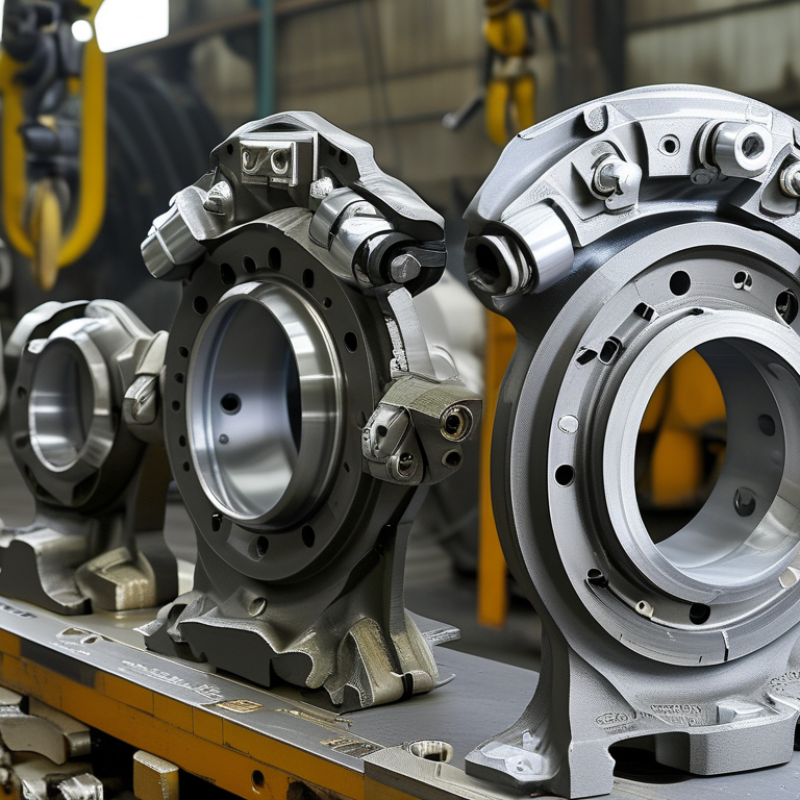
A brake carrier, also called a caliper bracket, anchors the caliper to the steering knuckle or axle housing. It transfers braking loads into the suspension structure. On floating calipers, it also supports guide pins and provides pad-abutment surfaces. Small alignment errors can create uneven pad wear, noise, or dragging.
Material selection depends on load, corrosion exposure, and vehicle weight. Ductile iron offers high stiffness and strong fatigue resistance. Steel can provide reliable strength with controlled wall thickness. Aluminum reduces mass, but it requires careful design around threads, heat, and local stress. A clean casting is not automatically a safe casting. Internal porosity may remain invisible.
Global buyers should verify mounting-hole spacing, bolt diameter, caliper offset, pad width, carrier thickness, and guide-pin center distance. These dimensions must match the knuckle, rotor, and caliper assembly. Tolerance checks matter more than catalog appearance. Measure critical surfaces with calibrated tools, then compare them with approved drawings.
Include corrosion testing, coating thickness, hardness, and fatigue validation in supplier audits. In practice, drawings may contain assumptions that experienced inspectors notice late. That is worth challenging before production. Surface finish also deserves attention, because rough pad ledges can restrict pad movement and increase heat buildup.
: China produced 30.16 million vehicles in 2023. This scale supports casting, machining, coating, and assembly networks.
Review material certificates and dimensional inspection records. Check mounting holes and caliper contact surfaces carefully. These areas face heat, vibration, and repeated loads.
Key factors include quality, capacity, original-equipment supply, export experience, and certifications. Production volume alone does not prove reliability. Evidence matters.
Request material grades, hardness data, corrosion results, and coordinate-measuring-machine records. Ask for batch-level traceability and corrective-action reports. Polished test reports are not enough.
Request samples from the same line used for mass production. Compare samples with approved drawings and technical documents. A small pilot order can reveal fitment problems early.
Suppliers may produce cast iron carriers, forged steel carriers, and caliper brackets. Applications can include passenger cars, commercial vehicles, trailers, and electric platforms. Exact axle and disc compatibility still requires confirmation.
Audits reveal calibration habits, storage conditions, tooling control, and workforce stability. A large workshop may still struggle with mixed specifications or urgent orders. Paper strength can mislead.
Review shipment consistency, destination markets, packaging quality, and after-sales records. Test packaging through realistic transport handling. It prevents costly surprises.
No. Verify certification scope, validity, and issuing bodies. Also examine drawings, inspection records, and repeat-production results. No ranking is perfect.
Teams may miss drawing revisions, regional specifications, or communication delays. Independent verification and clear inspection plans reduce these risks. Some public data may be incomplete.
This guide introduces the Brake Carrier, a key component that supports the brake caliper and helps maintain accurate pad alignment, stable braking, and reliable heat management. It explains common materials, structural designs, dimensional considerations, and the importance of matching the carrier with the vehicle’s braking system. China’s strong automotive manufacturing base, including approximately 30.16 million vehicles produced in 2023 according to CAAM, has created a broad supplier network serving passenger vehicles, commercial vehicles, and aftermarket applications.
The article presents a practical ranking of China’s top ten Brake Carrier manufacturers based on quality systems, production capacity, original-equipment supply experience, export performance, and relevant certifications. It also outlines how global buyers can evaluate suppliers by reviewing IATF 16949 certification, PPAP documentation, testing records, minimum order quantities, tooling capability, quality control processes, and lead times. This information helps purchasers compare manufacturing partners efficiently and select dependable suppliers for consistent, compliant, and cost-effective sourcing.

 BIT Automobile