Choosing among China’s top Brake Piston manufacturers requires more than comparing unit prices. The component sits inside a demanding system, where heat, pressure, corrosion, and repeated movement can expose weak machining quickly. Mordor Intelligence estimates that the global automotive brake system market will grow from approximately USD 42.69 billion in 2024 to USD 49.59 billion by 2029. That growth increases opportunity, but it also raises supplier expectations.
China’s manufacturing strength is visible in production scale. The China Association of Automobile Manufacturers reported over 31 million vehicles produced in 2024, including nearly 13 million new-energy vehicles. These vehicles can create different thermal and weight demands. A capable supplier should therefore demonstrate material certificates, dimensional inspection records, salt-spray testing, and endurance results. Ask for actual samples. Inspect the bore surface under magnification. A clean-looking piston may still fail after thousands of cycles.
Brake systems engineer Dr. Matthias Wendt offers a useful principle: “Reliable braking begins with repeatable manufacturing, not attractive specifications.” Buyers should examine forging or casting control, heat treatment, coating adhesion, sealing compatibility, and traceability. ISO 9001 certification helps, but it does not replace process evidence. IATF 16949 experience is more meaningful when supported by customer audits and stable delivery records.
No checklist is perfect. Some buyers focus too heavily on price and overlook tooling changes, batch variation, or packaging damage. Others request excessive customization without validating the design. The better approach combines laboratory data, factory observation, independent testing, and field feedback. This guide explains how to compare China’s Brake Piston manufacturers with practical, evidence-based judgment.
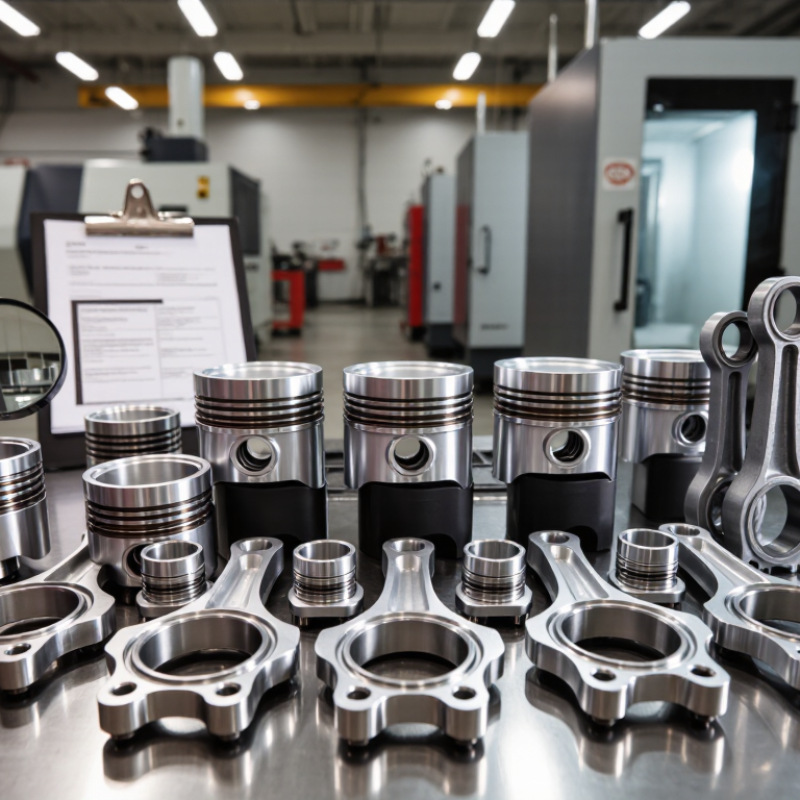
A brake piston is the small hydraulic actuator inside a caliper. When brake fluid creates pressure, the piston pushes the pad against the rotor. Its surface, seal groove, and sliding movement directly affect braking response. A minor machining flaw can cause uneven pad wear, fluid leakage, or piston sticking. The component looks simple. It is not.
Manufacturer selection matters because vehicles remain in service longer. S&P Global Mobility reported that the average U.S. light vehicle age reached about 12.6 years in 2024. Older calipers face corrosion, heat cycles, and contaminated fluid. The World Health Organization’s Global Status Report on Road Safety 2023 recorded approximately 1.19 million annual road deaths worldwide. This figure does not prove that piston defects caused crashes, but it shows why dependable braking parts deserve careful control. Evaluate material certificates, salt-spray results, dimensional inspection, seal compatibility, and traceable batch records. IATF 16949 certification can indicate a mature automotive quality system, but certification alone is not proof of good piston performance. That is an uncomfortable detail.
Tips: Request sample pistons before bulk orders. Check bore diameter, surface roughness, coating thickness, and return-rate data. Ask whether the manufacturer performs pressure, leakage, and endurance testing. Compare results with applicable OE specifications and recognized testing procedures. Do not choose only by quotation. A cheaper piston may create higher warranty costs later. In practice, supplier communication can also expose weaknesses; vague answers often deserve a second look.
| Evaluation Dimension | What a Brake Piston Does | Typical Technical Options or Data | What to Check with a Manufacturer | Why It Matters |
|---|---|---|---|---|
| Product Function | A brake piston transfers hydraulic pressure from the brake fluid to the brake pad or shoe, creating the clamping force required for braking. | Common applications include disc-brake calipers, drum-brake wheel cylinders, parking-brake systems, and commercial-vehicle braking assemblies. | Confirm the piston is designed for the correct caliper or wheel-cylinder structure, operating pressure, seal arrangement, and installation direction. | An incorrect piston geometry can cause leakage, uneven pad wear, poor brake release, or loss of braking performance. |
| Material Selection | The piston material affects mass, corrosion resistance, thermal behavior, wear resistance, and compatibility with brake fluid and seals. | Common choices include coated steel, stainless steel, aluminum alloys, and reinforced phenolic materials. The final choice depends on temperature, strength, weight, and application requirements. | Request material specifications, certificates of analysis, heat-treatment records where applicable, coating details, and compatibility evidence. | Material selection influences durability, heat transfer, corrosion resistance, and the risk of piston sticking. |
| Dimensional Accuracy | The piston must maintain the designed relationship with the bore, seal groove, dust boot, and brake pad interface. | Use the customer drawing as the controlling requirement. Bore-to-piston clearance, groove geometry, diameter, length, and concentricity must be defined by the specific brake design. | Check coordinate-measuring-machine reports, calibrated gauges, sampling plans, and measurement records for critical dimensions. | Dimensional variation may lead to hydraulic leakage, excessive travel, piston seizure, noise, or irregular brake wear. |
| Surface Finish | The outer piston surface interacts with the hydraulic seal and must support reliable sealing and smooth movement. | Surface roughness and waviness should follow the approved engineering drawing and seal supplier requirements; there is no single universal value for every piston design. | Ask for profilometer results, inspection frequency, polishing or grinding process details, and evidence that edges are free from damaging burrs. | A poor surface can damage the seal, increase friction, accelerate wear, and cause fluid leakage. |
| Corrosion Protection | Protection prevents corrosion on exposed or semi-exposed surfaces that may contact moisture, salt, road dirt, or brake fluid. | Possible controls include stainless-steel construction, protective coatings, conversion layers, controlled cleaning, and sealed packaging. | Review coating specifications, coating-thickness checks, adhesion testing, salt-spray results where required, and corrosion-prevention packaging. | Corrosion can increase friction, damage seals, restrict piston return, and reduce service life. |
| Thermal Performance | The piston separates or connects the hydraulic chamber and brake pad area, so it is exposed to heat generated during braking. | Thermal requirements depend on vehicle type, brake size, duty cycle, pad material, and cooling conditions. High-temperature testing should be application-specific. | Request thermal-cycle test plans, dimensional checks after heat exposure, seal compatibility data, and test temperatures relevant to the application. | Excessive heat can contribute to brake-fluid boiling, seal deterioration, vapor lock, and reduced braking consistency. |
| Seal and Fluid Compatibility | The piston works with hydraulic seals and brake fluid to maintain pressure while allowing controlled movement and retraction. | Compatibility must be confirmed for the specified brake fluid, such as glycol-based fluids or other fluid types defined by the vehicle system. | Verify seal material, fluid specification, swelling and shrinkage results, temperature range, and long-term compatibility testing. | Incompatible materials can cause swelling, hardening, cracking, leakage, or piston return problems. |
| Manufacturing Process | Consistent forming, machining, grinding, cleaning, coating, and inspection are necessary to produce repeatable brake pistons. | Relevant processes may include cold forming, CNC machining, centerless grinding, deburring, washing, heat treatment, and surface coating. | Evaluate process flow charts, control plans, work instructions, process-capability studies, and maintenance schedules for critical equipment. | A controlled process reduces variation and lowers the risk of defects reaching the brake assembly line. |
| Quality Management | Quality management controls whether production consistently meets approved drawings, specifications, and inspection requirements. | Look for a valid ISO 9001 quality-management certificate. For automotive supply, an IATF 16949-certified system is generally a stronger indicator of automotive process control. | Check certificate scope, certificate validity, audit history, corrective-action procedures, traceability, and change-control records. | A formal quality system improves consistency, accountability, documentation, and response to nonconforming products. |
| Automotive Submission Capability | Brake pistons used in vehicle programs normally require documented approval before mass production. | Common deliverables may include dimensional results, material certificates, process-flow documentation, control plans, failure-mode analysis, and production-part approval documents. | Confirm experience preparing PPAP-style documentation, first-article inspection reports, capability studies, and customer-specific submission packages. | Complete technical documentation shortens approval time and provides evidence that the part is production-ready. |
| Testing and Validation | Testing verifies that the piston performs reliably under pressure, temperature, corrosion, movement, and endurance conditions. | Relevant tests can include dimensional inspection, pressure-leak testing, cyclic movement, thermal cycling, corrosion exposure, coating adhesion, and seal compatibility testing. | Ask whether testing is performed in-house or by an independent laboratory and request test methods, sample quantities, acceptance criteria, and reports. | Validation reduces the chance of field failures that may affect vehicle safety and warranty costs. |
| Traceability | Traceability links each batch of pistons to raw material, process history, inspection results, operators, and shipment records. | Useful controls include batch numbers, date codes, material heat numbers, barcode labels, inspection records, and retained samples. | Check whether the manufacturer can trace a finished part back to its raw material and production records within a defined response time. | Good traceability supports fast containment, root-cause analysis, recall control, and regulatory or customer audits. |
| Production Capacity | Capacity determines whether the manufacturer can support prototype, pilot, and stable mass-production requirements. | Capacity should be assessed by equipment availability, operating shifts, bottleneck processes, inspection capability, and realistic monthly output rather than equipment count alone. | Request capacity calculations, production lead times, backup-equipment plans, inventory policies, and evidence of similar-volume production. | A supplier without sufficient capacity may create delivery delays, rushed inspections, or unstable process performance. |
| Prototype and Tooling Support | Early samples help confirm fit, function, material selection, and manufacturability before tooling or full-scale production is finalized. | Suitable options may include CNC prototypes, soft tooling, rapid samples, pilot runs, and controlled engineering changes. | Confirm sample lead time, tooling ownership, revision management, sample marking, and the process for approving design changes. | Strong development support helps identify design or assembly problems before they become expensive production issues. |
| Cost Structure | The purchase price is only one part of the total cost of a brake piston program. | Consider material, machining, coating, tooling, inspection, packaging, freight, testing, minimum order quantity, and potential warranty or rejection costs. | Compare quotations using the same drawing revision, material grade, coating specification, inspection scope, packaging standard, and delivery terms. | The lowest unit price may create higher total cost if it leads to defects, delays, rework, or early replacement. |
| Packaging and Logistics | Packaging protects the piston surface, sealing areas, and critical dimensions during storage and transportation. | Recommended controls may include separators, corrosion-protective materials, sealed bags, humidity control, batch labels, and impact-resistant cartons. | Review packaging samples, stacking limits, storage conditions, shipping documents, export experience, and delivery performance records. | Proper logistics control prevents scratches, corrosion, contamination, mixed batches, and damage before assembly. |
| Supplier Communication | Brake-piston projects often require close coordination between the manufacturer, brake-system designer, seal supplier, and vehicle or machinery customer. | Important communication areas include drawing clarification, engineering changes, nonconformance reports, test results, and corrective-action deadlines. | Evaluate response speed, technical English capability, engineering support, escalation procedures, and willingness to provide objective evidence. | Clear communication reduces misunderstandings and accelerates problem resolution during development and production. |
| Selection Recommendation | A suitable manufacturer should combine technical capability, quality control, validation resources, stable capacity, and transparent communication. | Prioritize verified process capability and application-specific testing over general claims such as “top quality” or “lowest price.” | Use a supplier audit, document review, sample approval, capability assessment, and controlled pilot order before long-term sourcing. | Manufacturer selection directly affects brake reliability, product safety, compliance, delivery stability, and total lifecycle cost. |
Common types include caliper, master cylinder, and wheel cylinder pistons.
Stainless steel, aluminum alloy, and coated steel are widely used.
Check bore tolerance, surface roughness, hardness, and corrosion resistance.
No. Certificates provide useful evidence, but they do not prove every batch is consistent.
Request records linking raw metal batches to finished shipments.
Request first-article inspection reports, process control plans, and sample approval records.
Yes. Electric vehicles still use hydraulic friction brakes.
Compare dimensions, coating thickness, seal compatibility, and batch traceability.
Choosing the right China Brake Piston manufacturer is essential for ensuring reliable braking performance, consistent product quality, and long-term supply stability. A brake piston transfers hydraulic pressure to the brake pads, making its material, dimensions, surface treatment, and manufacturing accuracy critical. Chinese manufacturers may produce various types for different vehicle systems, including fixed, floating, coated, stainless steel, aluminum, and customized pistons.
A careful selection process should include reviewing the manufacturer’s experience, engineering capabilities, production equipment, quality control procedures, testing methods, and ability to meet required specifications. Reliable suppliers should follow recognized quality management systems, maintain accurate inspection records, and provide stable performance from batch to batch. Buyers should also compare quotations based on material quality, tooling, customization options, minimum order quantities, delivery schedules, and production capacity rather than focusing only on the lowest price. Clear communication, sample testing, technical support, and dependable after-sales service can further reduce purchasing risks and support a successful long-term partnership.

 BIT Automobile