Top Front Caliper Suppliers for Global Buyers

Time:2026-11-10 Author:Amelia
0%

Choosing a front caliper supplier involves more than comparing unit prices. Front Calipers must match the vehicle platform, brake configuration, and operating conditions. A small mismatch in mounting points or piston dimensions can delay installation and create costly rework. Fit comes first.

Global buyers also need suppliers that can explain how products are made and checked. Ask about material specifications, corrosion protection, pressure testing, and inspection records. Clear answers matter. A detailed drawing, sample report, or traceable batch label can reveal more than a polished catalog. Reliable communication is equally important when orders cross time zones or require custom packaging.

This guide introduces notable front caliper suppliers and the factors buyers can use to assess them. It considers product range, manufacturing capability, quality controls, export experience, and support after delivery. These criteria help narrow a shortlist, but they cannot replace direct checks. Request current documentation and confirm that listed certifications apply to the relevant facility and product. A supplier may perform well on standard models yet struggle with low-volume variants. That trade-off is easy to miss.

No ranking stays perfect. Supplier capabilities change, and public information may be incomplete. Treat comparisons as a starting point, then verify specifications, lead times, and service terms for your own application. Careful checks can reduce avoidable surprises. Not eliminate them.
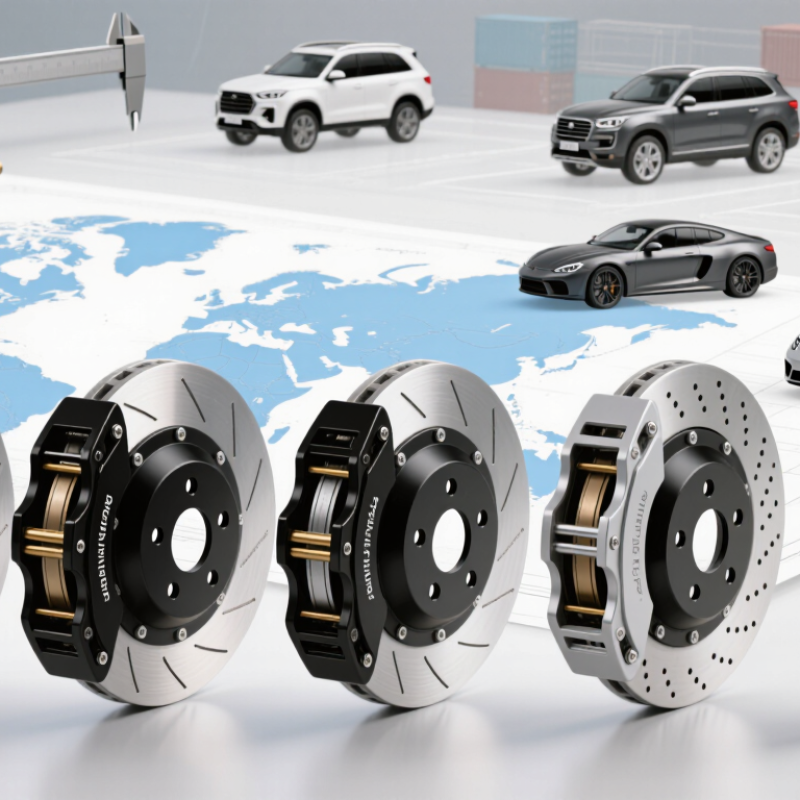
Top Front Caliper Suppliers for Global Buyers

Understanding Front Calipers and Their Role in Brake Systems

A front caliper converts hydraulic pressure into clamping force at the wheel. When the driver presses the pedal, brake fluid moves pistons inside the caliper. The pistons press the pads against the rotating disc, creating friction and slowing the vehicle. In a floating design, the caliper slides to apply pressure across the disc; fixed designs use pistons on both sides. That difference affects packaging, service needs, and performance. Heat is part of the job. Calipers must handle repeated heating and cooling without sticking or losing consistent pad contact.

For buyers comparing suppliers, material quality, machining accuracy, piston seals, and corrosion protection deserve close attention. A caliper that fits but binds on its guide pins can cause uneven pad wear, pulling, or excess heat. Fitment data matters too: axle position, disc dimensions, mounting points, and hydraulic connections must match the application. Small details count. Visual checks help, but cannot confirm internal seal condition or machining accuracy. A careful supplier should provide traceable specifications and inspection records, though paperwork alone does not prove performance. Easy to miss. A practical choice balances verified testing, consistent production, and accessible technical support; real-world service feedback may still reveal gaps.

Key Standards and Specifications for Global Buyers

Top Front Caliper Suppliers for Global Buyers

Key Standards and Specifications for Global Buyers

A front caliper must match the vehicle’s hydraulic system, mounting geometry, and operating conditions. NHTSA’s FMVSS No. 135 sets a 70-meter maximum stopping distance in the 100 km/h service-brake test for covered light vehicles up to 3,500 kg GVWR. This is a vehicle-level benchmark, not a caliper-only pass mark. Buyers should also review SAE J2522 dynamometer test results and confirm the test configuration reflects the intended vehicle.

Request dimensional drawings, piston and bore tolerances, fluid compatibility, pressure-leak results, and corrosion-test records. ISO 9227 defines salt-spray test methods, but it does not set one universal acceptance duration for every caliper. Specify the required exposure time and inspection criteria in the purchase documents. Check that test reports identify the sample, test conditions, and revision level. A polished report can still leave gaps.

Tips: Compare suppliers using the same test plan. Ask for measured results, not just “compliant” statements. Check mounting-hole spacing and hose-port orientation against a physical sample. If the drawing omits temperature limits or retraction criteria, clarify them before approval; that omission is easy to overlook.

Brake Fluid Boiling-Point Requirements Relevant to Front Calipers

Brake fluid must meet the specified boiling-point minimums under FMVSS No. 116. These values are useful when checking fluid compatibility for caliper assemblies; they are fluid-standard requirements, not caliper performance ratings. Always confirm the vehicle manufacturer's specified fluid grade.

Source: U.S. Federal Motor Vehicle Safety Standard No. 116 (49 CFR § 571.116). Values shown are minimum equilibrium reflux boiling points in °C.

Types of Front Caliper Suppliers and Their Capabilities

Top Front Caliper Suppliers for Global Buyers

Types of Front Caliper Suppliers and Their Capabilities

Front caliper suppliers typically include original-equipment manufacturers, aftermarket producers, distributors, and remanufacturers. Each serves a different purchasing need. Original-equipment manufacturers often support vehicle programs with engineering input, controlled production processes, and dimensional inspection. Their capabilities may suit buyers needing consistent volumes and specified fit.

Aftermarket producers usually offer broader product coverage across vehicle models. They may provide drawings, fitment data, and replacement assemblies, but coverage and testing practices can vary. Distributors add value through local inventory and consolidated sourcing. Check whether their technical support can verify details such as piston diameter, mounting-ear spacing, and brake-fluid port threads. Small differences matter.

Remanufacturers inspect used caliper bodies and replace selected wear components. Their processes may include cleaning, surface checks, and pressure or leak testing. Ask what each inspection covers. A polished exterior alone proves little. For any supplier type, buyers can request material specifications, test records, and batch traceability before placing a large order. Documentation helps, though it cannot replace fit checks on the intended application. Supplier capability is not always obvious from a catalogue, and that distinction is easy to miss.

How to Evaluate and Compare Potential Suppliers

Top Front Caliper Suppliers for Global Buyers

How to Evaluate and Compare Potential Suppliers

When evaluating front caliper suppliers, begin with the exact vehicle application, mounting dimensions, and operating conditions. Request drawings and confirm piston size, material, seal specifications, and brake fluid compatibility. A part that looks identical may still have different tolerances. Ask how the supplier controls machining accuracy and corrosion protection, especially around piston bores and sliding surfaces. Check.

Request sample parts and inspect them before discussing large orders. Look for clean casting surfaces, consistent finish, secure packaging, and clear part identification. Ask for documented pressure and leakage test procedures, inspection records, and traceability by production batch. Compare delivery capacity, defect handling, and communication alongside unit price. A lower quote can become costly if dimensions vary or replacement parts arrive late. A polished document is useful, but it cannot replace physical checks.

Tips: Send the same technical checklist to every candidate. Compare written answers, sample measurements, lead times, and total landed cost in one sheet. If a response is vague, ask again; suppliers may need time to provide reliable details, and buyers can overlook small mismatches too.

Steps for Verifying Suppliers and Managing Global Sourcing

When evaluating front caliper suppliers, verify the factory behind the quotation, not just its catalogue. Request current business details, production-site information, and the quality certificate’s scope. A certificate is useful only when its site and processes match the parts being purchased. Ask for material records, dimensional inspection reports, and traceability from incoming metal to finished caliper. Check critical features, including bore dimensions, mounting points, and surface treatment. Details matter.

Before placing a large order, review a production sample against an agreed drawing and inspection plan. Use a qualified inspector when your team cannot visit the site. Keep signed sample records; memory is a poor quality system. Discuss defect handling, replacement lead times, packaging, and who approves any process change. For global sourcing, confirm realistic production capacity, shipping buffers, and one named contact for technical questions. Build a small trial order into the schedule. It may expose problems, and that costs time. Still, skipping it can cost more. No checklist is perfect: reports can be incomplete, and schedules can slip. Recheck performance after the first shipment, then adjust order volumes using measured quality and delivery data.

FAQS

What does a front caliper do?

It converts hydraulic pressure into clamping force. Pistons press the brake pads against a rotating disc, creating friction and slowing the vehicle.

How do floating and fixed calipers differ?

A floating caliper slides to apply pressure across the disc. A fixed design uses pistons on both sides. Packaging and service needs differ.

Which fitment details should buyers confirm?

Confirm axle position, disc dimensions, mounting points, piston size, and hydraulic connections. Small mismatches matter.

What should buyers inspect on sample parts?

Look for clean casting surfaces, an even finish, secure packaging, and clear part identification. Check dimensions too.

Which technical details deserve close attention?

Ask about piston seals, brake-fluid compatibility, machining accuracy, and corrosion protection. A part can look right and still bind.

What records should a supplier provide?

Request drawings, pressure and leakage test procedures, inspection records, and batch traceability. Paperwork helps, but it does not prove performance.

How can buyers compare supplier offers fairly?

Send each candidate the same checklist. Compare sample measurements, lead times, defect handling, communication, and total landed cost—not unit price alone.

Can visual inspection confirm a caliper’s internal condition?

No. It cannot reveal seal condition or machining accuracy. I could overlook something, so combine physical checks with records and service feedback.

Conclusion

Front Calipers are essential components of a vehicle’s braking system, applying pressure to the brake pads so they can slow or stop the wheel. For global buyers, selecting a suitable supplier involves more than comparing prices. Buyers should understand the caliper types available, their intended applications, material and performance requirements, and the standards and specifications relevant to their markets. Clear requirements help ensure that products are compatible with the vehicle and meet expectations for quality, durability, and consistent production.

Potential suppliers may include manufacturers, distributors, and specialized component providers, each with different capabilities and levels of technical support. Compare them using factors such as production capacity, quality-control processes, customization options, communication, delivery performance, and documentation. Before placing an order, verify company information, review product and inspection records, request samples when appropriate, and confirm packaging, shipping, and after-sales arrangements. A structured evaluation and sourcing process can reduce uncertainty and support dependable long-term supply.


Amelia

Amelia

Amelia is a seasoned marketing professional with a wealth of expertise in our company’s core offerings. With an unwavering passion for driving growth and innovation, she plays a pivotal role in shaping our marketing strategies and enhancing brand visibility. A key aspect of her responsibilities......