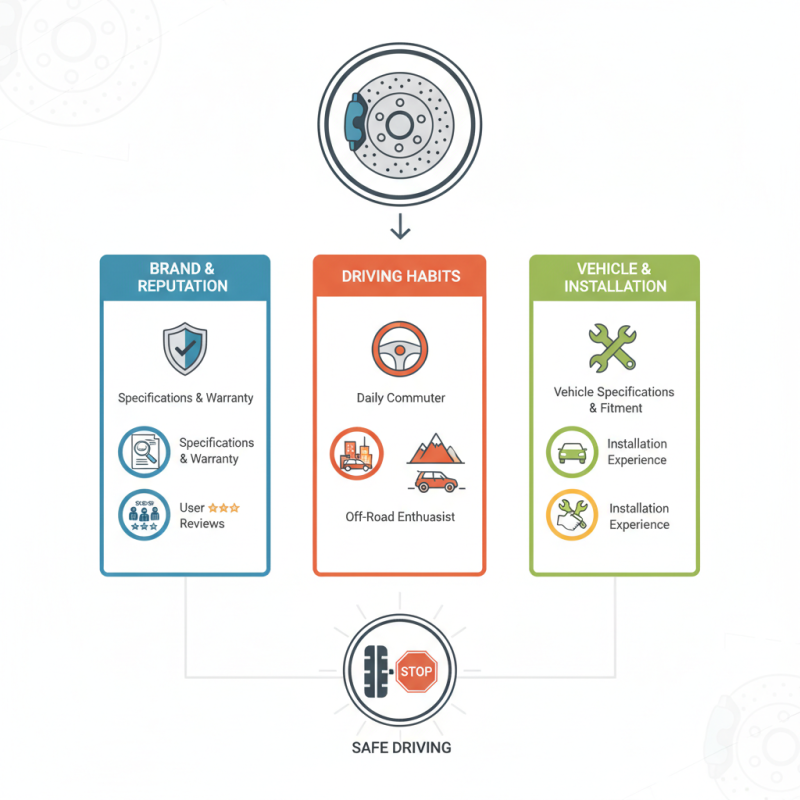
Selecting the right Disc Brake Caliper for your vehicle is crucial. A caliper is vital for stopping power and safety. It’s important to match the caliper with your vehicle's specifications. Quality and performance can vary significantly between different products.
When choosing a Disc Brake Caliper, consider brand reputation. Trustworthy manufacturers often provide detailed specifications and warranties. Research user reviews to gauge reliability. However, don’t overlook that even reputable brands can have occasional issues.
Think about your driving habits. Are you a daily commuter or an off-road enthusiast? Your needs will influence the best caliper choice. Remember, the perfect fit is not solely about brand. You may need to adjust your options based on installation experiences. Reflect on these factors carefully to ensure safe driving.
Choosing the right disc brake caliper can significantly impact your vehicle’s braking performance. There are various types available, and understanding these can help make an informed choice.
There are two main types of disc brake calipers: floating and fixed. Floating calipers have one or two pistons on one side. They are lighter and often found on standard vehicle designs. Fixed calipers have pistons on both sides of the rotor. They provide better performance but can be heavier and more complex. Understanding your driving style and needs is crucial.
For high-performance vehicles, fixed calipers are preferable. They offer superior braking under stress. However, floating calipers can be more suitable for daily commuting. They are more cost-effective and easier to maintain. Reflecting on your vehicle's usage and requirements can lead to better decisions.
When choosing a disc brake caliper, material plays a crucial role. Aluminum and cast iron are the two primary options available. Aluminum calipers are lighter, which enhances vehicle performance. According to industry data, aluminum calipers can reduce unsprung weight by up to 40%. This weight reduction often leads to improved acceleration, handling, and overall fuel efficiency.
On the other hand, cast iron calipers excel in durability and heat resistance. These calipers can withstand higher temperatures without warping, which is essential for many high-performance applications. Research indicates that cast iron can maintain performance under extreme conditions better than aluminum. However, their heavier weight can negatively impact vehicle dynamics, particularly in sports or racing scenarios.
Both materials have their advantages and disadvantages. While aluminum calipers offer weight savings, their susceptibility to corrosion is a consideration. Cast iron's toughness can be a double-edged sword; its weight could affect performance. Vendors and manufacturers stress the importance of matching the caliper material to the vehicle’s intended use. Evaluating these attributes is essential for making an informed decision.
When selecting a disc brake caliper, understanding its size is critical. The caliper's compatibility with rotor dimensions can greatly affect braking performance. If the caliper is too small, it may not properly engage the rotor. This can lead to reduced braking efficiency. A larger caliper offers more surface area for the brake pads, enhancing stopping power.
Consider measuring your rotor carefully. The rotor's diameter and thickness should match the caliper specifications. Some vehicle models have specific caliper sizes designed for optimal performance. Using the wrong size could result in uneven wear or brake failure.
Tips: Always check your vehicle’s manual for exact specifications. Consult with experts to verify compatibility before making a purchase. It's essential to keep track of wear over time. Regular inspection can prevent issues caused by mismatched components. Remember, investing time now can save you money and ensure safety later.
| Vehicle Make | Caliper Size (mm) | Recommended Rotor Diameter (mm) | Mounting Type |
|---|---|---|---|
| Toyota | 48 | 305 | Floating |
| Honda | 42 | 262 | Fixed |
| Ford | 56 | 330 | Floating |
| Chevrolet | 50 | 305 | Fixed |
| Nissan | 46 | 300 | Floating |
When selecting a disc brake caliper, two critical performance factors stand out: heat dissipation and brake force. Effective heat dissipation is essential for maintaining braking performance and prolonging component life. High-performance calipers are often designed using aluminum or specific composites. According to industry studies, calipers that efficiently dissipate heat can lower brake temperatures by as much as 25%. This reduction minimizes brake fade, allowing for consistent stopping power under demanding conditions.
Brake force is another pivotal aspect to consider. The caliper's design influences how force is applied to the brake pads. Studies indicate that well-engineered calipers can improve brake response by up to 30%. This enhancement makes a significant difference, especially in high-performance or heavy-duty vehicles. Improper caliper sizing can lead to insufficient clamping force, which may compromise vehicle control.
It's crucial to analyze your vehicle’s specific needs and driving style. While performance stats provide valuable insights, personal experience is equally relevant. Conducting real-world tests is important. What feels right during a quick stop may not perform as expected during prolonged braking situations. Paying attention to these factors will lead to better choices in caliper selection.
When selecting a disc brake caliper, it's essential to consider key brands and industry standards. Many reputable manufacturers follow strict quality control measures. Their products undergo rigorous testing to ensure performance and safety. Look for calipers that meet or exceed industry standards set by organizations such as SAE (Society of Automotive Engineers) and ISO (International Organization for Standardization). Compliance with these standards indicates reliable quality.
Details matter in brake caliper selection. Be aware of the material used in calipers. High-quality aluminum alloys can enhance performance and reduce weight. Calipers should also have appropriate features, such as anti-corrosion coatings for longevity. Inspecting the design is crucial too; some calipers provide better heat dissipation than others.
Experience shows that not all calipers are created equal. Sometimes, customers might rush their choices based on price alone. This could lead to poor brake performance. Misunderstandings about compatibility can also arise. Ensuring the right fit for your vehicle model is vital. Hence, investing time in research and understanding specific needs can yield better results. A poorly chosen caliper can compromise your safety and driving experience.
Make choices with care and seek expert advice when needed.
: Caliper size affects compatibility with rotor dimensions, impacting braking performance and efficiency.
A small caliper may not engage the rotor properly, leading to reduced braking efficiency.
Measure the rotor's diameter and thickness to ensure they match caliper specifications.
Using the wrong size can cause uneven wear or even brake failure over time.
High-performance calipers often use aluminum or specific composites for effective heat dissipation.
Better heat dissipation reduces brake temperatures, minimizing brake fade during intense driving.
Brake force influences how effectively the caliper applies pressure to the brake pads, improving response.
Analyze your vehicle's needs, driving style, and consult experts before purchasing calipers.
Relying solely on performance stats without personal experience can lead to poor choices.
Regular inspections are essential to identify wear and compatibility issues before they become serious.
When selecting the best disc brake caliper for your vehicle, it's essential to understand the various types available and their specific applications. The choice between aluminum and cast iron calipers largely depends on your vehicle's requirements, as both materials offer unique benefits in terms of weight and durability. Additionally, the caliper size must be compatible with the rotor dimensions to ensure optimal performance.
Performance factors play a crucial role in the effectiveness of disc brake calipers, particularly concerning heat dissipation and the ability to generate sufficient brake force. Understanding these factors, along with familiarizing yourself with industry standards, will help you make an informed choice. Prioritizing these considerations ensures that you select a disc brake caliper that not only fits your vehicle but also meets your performance and safety needs effectively.

BIT Automobile